
VIN17
A full VIN contains 17 characters and is the preferred identifier for vehicle-specific requests. It appears on the vehicle, registration documents and diagnostic data. Online services use VIN17 when the upstream operation requires an unambiguous vehicle identity.
Enter the characters exactly as read. Avoid spaces, punctuation and visually similar substitutions. A copied VIN should be checked against the vehicle before a paid or protected request is started.
VIN7
Many BMW tools, filenames and workshop conversations use the last seven characters of the VIN. This short identifier is convenient for searching and display. It is often enough to locate a likely vehicle record, but it is not a replacement for VIN17 in every workflow.
As production ranges and markets overlap, the same seven-character suffix can resolve to more than one full VIN. Therefore a VIN lookup may return a selection instead of silently choosing one result.
How VIN7 resolution works
The program looks for vehicles matching the last seven VIN characters. If several results appear, compare the full identifier with the vehicle or its records.
Do not choose the first result just because the model looks right. Use the full VIN when available. The Russian SFA web form requires VIN17.
Choosing between multiple matches
| Field | How to use it |
|---|---|
| Model/series | Compare with the connected vehicle and documents. |
| Type key | Use diagnostic or vehicle-order data when available. |
| Production/delivery date | Reject records from an impossible production period. |
| Market/body/engine information | Use as additional confirmation, not the only criterion. |
| VIN17 | Verify against the physical vehicle or trusted diagnostic read. |
Which format each service should use
- Online SFA order: use VIN17. VIN7 support in a desktop tool is not a web-form requirement.
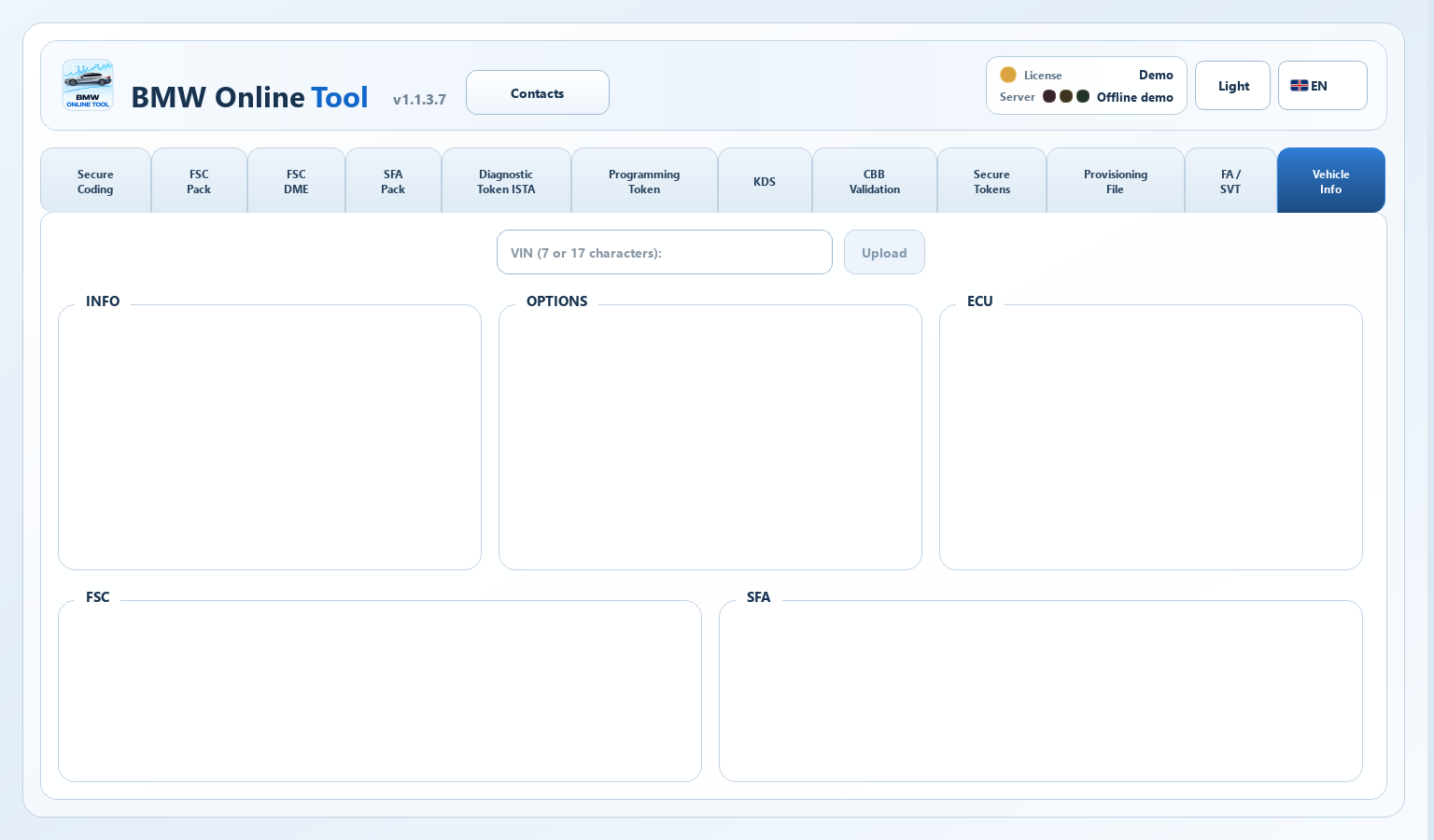
- Vehicle information in the application: use VIN17, or resolve VIN7 and verify the full result.
- NCD 2.0 / 3.0: supply FA and SVT; a VIN alone does not replace them.
- KDS, CBB and ISTA: provide the original request for the intended operation.
Common input errors
- Entering the letter O instead of zero, or I instead of one.
- Using a VIN7 from a screenshot without confirming the vehicle.
- Selecting the first VIN lookup match only because it has the same model name.
- Combining a resolved VIN17 with FA/SVT files from another vehicle.
- Assuming that a valid-looking VIN is automatically supported by the requested service.
Privacy and record keeping
A VIN identifies a vehicle and should be shared only where needed for diagnosis, service or an authorized transaction. Store request files securely, avoid publishing full VINs in public screenshots, and keep enough local records to prove which vehicle was selected when a VIN lookup presented multiple choices.
ONLINETOOL SERVICES
Use the related online service
Learn the difference between BMW VIN7 and VIN17, why a seven-character identifier may be ambiguous, and when a full VIN is required for online requests.
Frequently asked questions
Is VIN7 always unique?
No. It can be sufficient for a search but may match more than one VIN17.
Which VIN should I enter when I know both?
Use VIN17. It removes the ambiguity inherent in the shortened suffix.
Can I change the VIN in FA after resolving VIN7?
No. The FA should remain the original file from its vehicle.
Why does the VIN lookup show two cars?
The seven-character suffix can occur in more than one vehicle record. Select using the full vehicle details.
BMW Factory FA by VIN vs Current Vehicle Order
Compare BMW factory FA, the Vehicle Order read from a car and the configuration intended for a retrofit or NCD request.